Zoom & Google Meet Are Branded to Them, Not You — Here's the Fix
WebMeet® Solutions
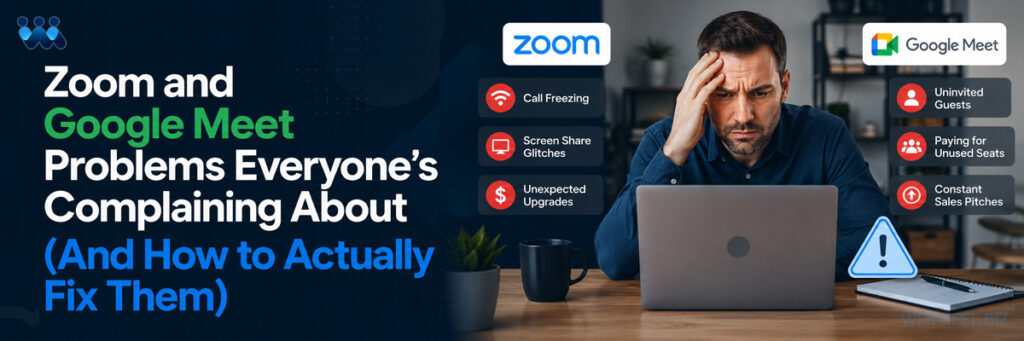
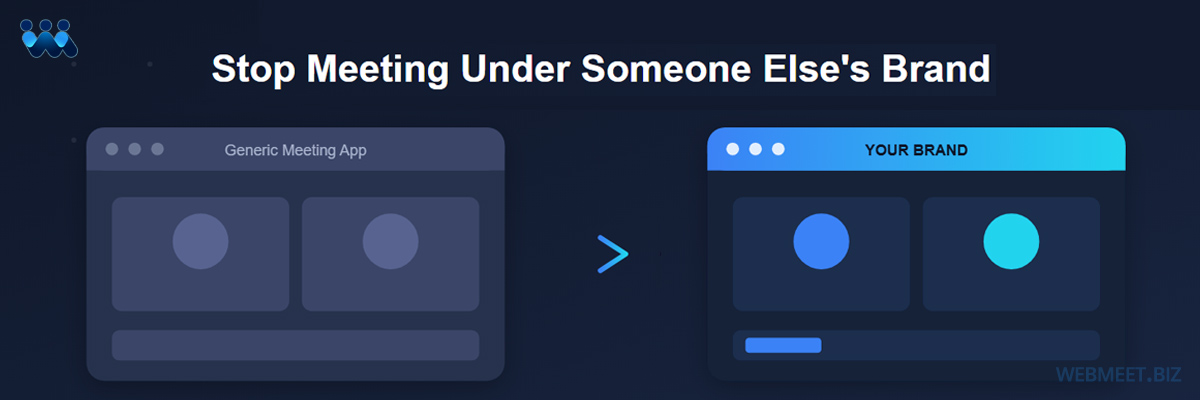
Here’s a quiet cost that rarely makes it into a vendor comparison spreadsheet: every time your team hosts a client call, sales demo, or onboarding session on Zoom or Google Meet, the meeting experience is visibly branded as Zoom or Google Meet — not as your company. Reviewers of Google Meet routinely note the interface looks “less professional” compared to alternatives, and the platform itself offers no path to change that. Your logo isn’t on the waiting screen. Your domain isn’t in the join link. The software your client sees is a third party’s product, not yours.
For any business selling a premium service, a white-label deployment isn’t a cosmetic nice-to-have — it’s part of the product experience itself. Clients form impressions based on every touchpoint they have with a vendor, and a meeting platform is often one of the most frequent touchpoints of all — more frequent, in many cases, than the website, the proposal document, or the contract itself.
What Generic Branding Actually Costs
The cost here is subtle because it doesn’t show up as a single dramatic failure — no meeting crashes, no data gets exposed. Instead, it shows up as a quiet, cumulative signal sent to every client on every call: that the vendor either couldn’t or didn’t bother to invest in a meeting experience that reflects their own brand. For a business charging premium rates or positioning itself as a serious enterprise partner, that signal works against the very positioning the business is trying to establish elsewhere — in its marketing, its sales materials, its account management. A polished proposal followed by a generic, third-party-branded meeting experience creates a mismatch that sophisticated buyers notice, even if they never say so directly.
Why It Happens
Zoom and Google Meet are built as single, centrally branded products distributed to every customer identically. There’s no architecture underneath that supports a customer running the platform under their own domain, logo, and visual identity — the branding is baked into the product at the infrastructure level, which means every customer, regardless of size or spend, is presenting the same generic third-party interface to their own clients. A small reseller and a Fortune 500 enterprise customer both see the identical Zoom or Meet interface, because the platform was never designed with a white-label deployment model in mind — branding customization, where it exists at all, tends to be cosmetic (a logo in a corner) rather than a genuine white-label experience running under the customer’s own domain.
How WebMeet® Solves It
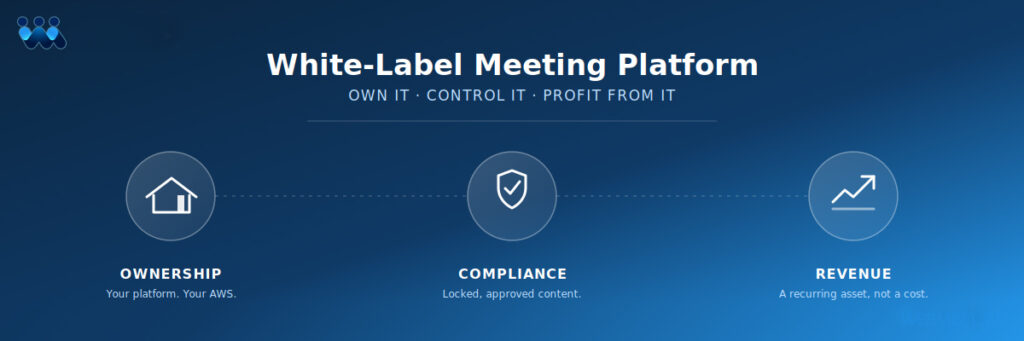
WebMeet® was built as white-label infrastructure from the ground up — deployed into each licensee’s own AWS environment, under the licensee’s own logo and domain, not a co-branded or “powered by” experience layered on top of someone else’s product. When a client joins a WebMeet® session, what they see is the licensee’s platform, running the licensee’s pre-built meeting rooms with the licensee’s approved content, layouts, and visual identity.
That’s the core of the platform’s positioning: own the experience, capture the revenue, scale on your terms. The meeting technology becomes an extension of the licensee’s own brand rather than a visible reminder that they’re using a third-party tool underneath. From the join link to the waiting screen to the meeting room itself, every touchpoint reinforces the licensee’s own identity rather than a third party’s.
A Consideration for Growing Licensees
As a licensee’s own customer base grows, the value of white-label consistency grows with it. A handful of client meetings on generic third-party software might go unnoticed. Hundreds of recurring sessions a month, across an entire client roster, is a very different scale of brand exposure — and at that scale, whether the meeting experience reinforces or undercuts the licensee’s brand becomes a meaningful factor in how the business is perceived across its entire customer relationship, not just in any single meeting.
What This Means for Positioning
For a licensee selling meeting technology as part of a broader service offering, this isn’t just about aesthetics — it’s about the story the platform tells about the business behind it. A fully white-labeled experience signals investment, control, and a level of operational maturity that a generic third-party interface simply cannot. It also creates a stickier product: clients come to associate the polished meeting experience with the licensee’s brand specifically, rather than with an interchangeable third-party tool that could just as easily belong to a competitor.
There’s also a differentiation angle that matters in competitive sales situations. When two vendors are otherwise comparable on price and service, the one whose entire client-facing experience — including the meeting technology itself — reflects a coherent, owned brand identity is presenting a more complete, more considered offering. That’s a subtle advantage, but subtle advantages compound across a sales cycle, especially when a prospect is evaluating multiple vendors side by side and forming impressions from every interaction along the way.
The Bottom Line
Clients notice whose product they’re sitting inside of. WebMeet® exists so that the platform disappears into your brand instead of standing in front of it.
Schedule a strategy call today, and let’s talk about what your branded web meeting solution could do for your business.