White Label Web Meeting Platform:
Built to Own, Not Rent
Every month, your organization pays for a meeting platform it doesn’t own, can’t fully brand, and doesn’t control the roadmap of. If you sit in corporate leadership deciding how your field presents your opportunity, that’s not a minor operational detail — it’s live exposure sitting inside every meeting your distributors run. A generic tool puts someone else’s logo in front of your prospects, someone else’s guest caps on your growth, and someone else’s priorities on what gets fixed first. A real white label web meeting platform changes that equation — not by adding a logo swap on top of the same rented infrastructure, but by rebuilding the ownership model underneath it.
The Real Risk of Renting Your Meeting Infrastructure
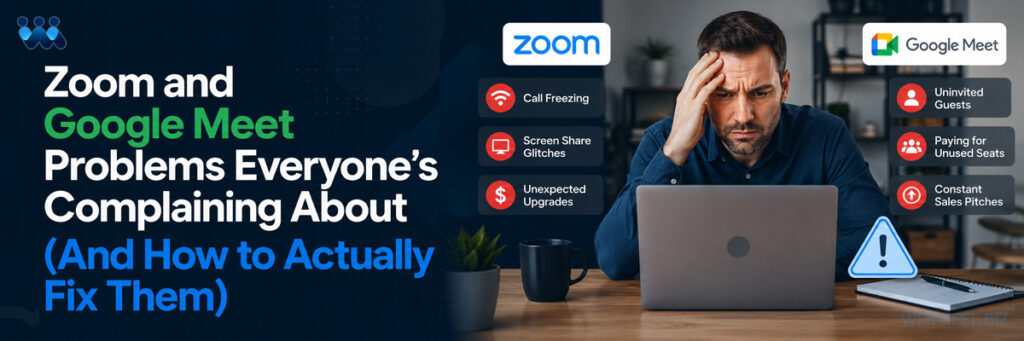
Ask any field leader what happens when a meeting goes sideways — frozen video, a guest limit hit mid-webinar, a distributor screen-sharing the wrong tab — and you’ll hear the same story: it doesn’t feel like a tech glitch, it feels like a broken first impression. Multiply that across hundreds of distributors running their own opportunity calls on their own accounts, on platforms your company doesn’t control, and the operational annoyance becomes something bigger.
It becomes a brand-consistency problem, because every distributor’s room looks and behaves differently. It becomes a compliance problem, because there’s no reliable way to confirm which deck, which claims, which disclaimers were actually shown in a given meeting. And it becomes a financial problem, because your organization is quietly subsidizing — or watching your distributors pay out of pocket for — tools that generate zero revenue back to the company. None of that shows up on a line item labeled “meeting platform risk.” It shows up later, in inconsistent messaging, in compliance reviews that take longer than they should, and in a growth engine that never became a profit center.
What “White Label” Should Actually Mean
Plenty of platforms will put your logo on their login screen and call it white label. That’s cosmetic branding on top of infrastructure you still don’t own, still can’t customize at the account level, and still can’t take with you if the relationship ends. A genuine white label web meeting platform is deployed inside your environment, governed by your policies, and backed by continuity protections that don’t depend on one vendor’s goodwill.
Where WebMeet® Fits: Built to Be Owned, Not Rented
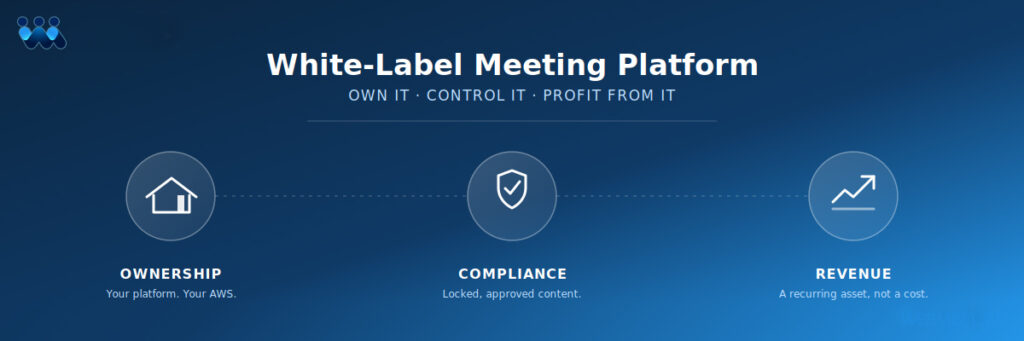
WebMeet® is deployed inside your company’s own AWS account, which means your organization — not WebMeet® — controls data custody. If the relationship with WebMeet® ever ended, your company would be the one responsible for archiving, exporting, or deleting that data, because it was never anyone else’s infrastructure to begin with. That’s paired with optional software escrow, so platform continuity doesn’t hinge on any single vendor relationship, and pricing that’s fixed by tier with no term commitments, so your organization isn’t locked into a contract to keep the lights on.
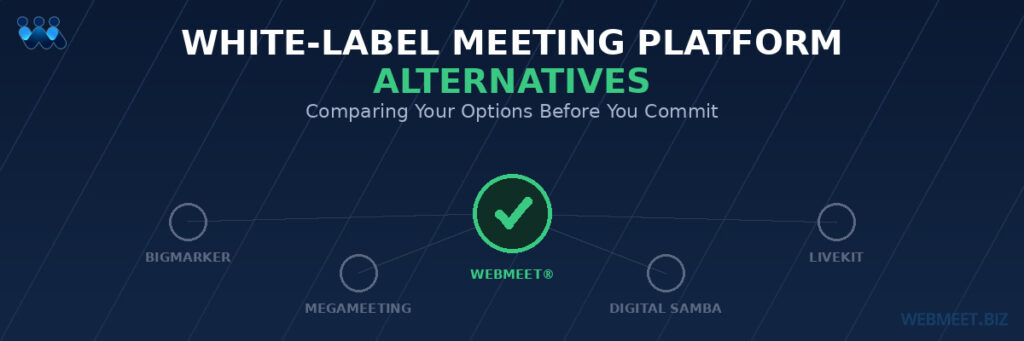
This is also where a genuinely white-label platform can go further than a shared, one-size-fits-all product: because each licensee’s deployment runs in its own environment, WebMeet® can take on scoped, quoted development work specific to a licensee’s needs, governed by that licensee’s Master Licensee Agreement. It’s not a guaranteed line item or instant custom build — it’s a defined path that simply doesn’t exist on platforms where every customer shares the same infrastructure and the same fixed roadmap. For a full breakdown of how ownership models differ across the category, see our comparison of white-label meeting platform alternatives.
Compliance and Brand Control, Built Into the Room
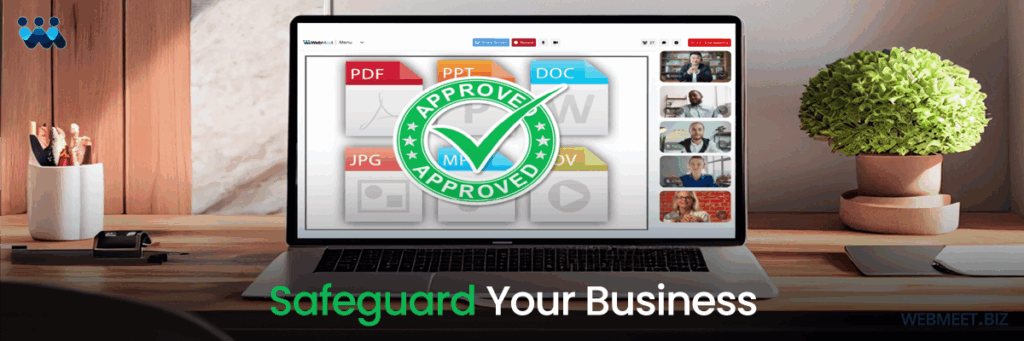
Ownership matters most where compliance and brand consistency actually live: inside the meeting itself. WebMeet® lets corporate upload and lock the official product, opportunity, and compliance decks and videos — distributors present the exact approved version every time, with optional personal add-ons that never alter the core content. When corporate updates a disclaimer or a slide at the source, the latest version is instantly available in every distributor’s room fieldwide, so there’s no old PDF still circulating three versions back.
That same control extends to how content gets shown. With Present Slides and Present Videos, hosts present decks, PDFs, images, and video directly from inside the meeting room — not through a screen-share window that exposes desktop notifications, unrelated tabs, or a shaky connection. The host’s camera automatically turns off during playback, so guest attention stays on the content instead of splitting focus, and the experience holds up even on weak Wi-Fi. Layer in granular, real-time guest permissions — a host can grant or revoke mic, camera, or presentation rights for one specific person mid-meeting, without opening the floor to everyone — and every distributor’s room stays as controlled and on-brand as your best-run corporate presentation, at whatever scale the meeting calls for, from a living-room follow-up to an arena-sized event.
Turning the Platform Into a Line of Revenue
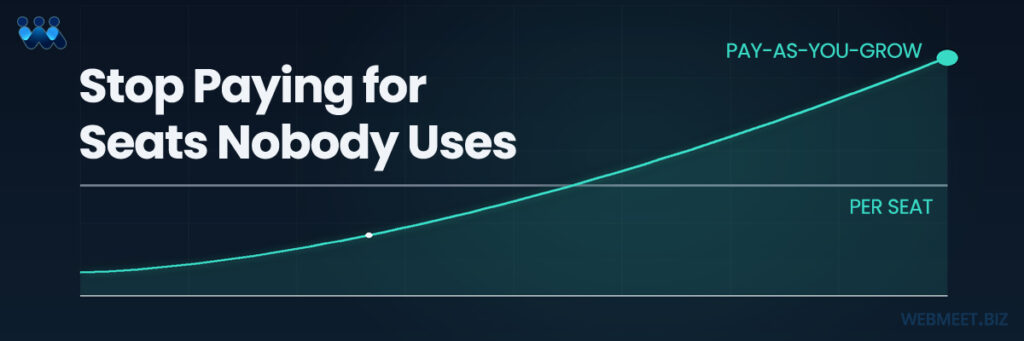
A rented tool is a cost center by definition — money leaves the organization every month with nothing coming back. An owned, white-labeled platform flips that. WebMeet® runs on pay-as-you-grow, fixed-tier royalty pricing, which means your company can package branded meeting rooms into enrollment kits, leadership qualifications, or monthly business-tool subscriptions and collect that revenue directly, instead of watching it flow to an outside vendor with no strategic return. As adoption scales, that becomes a predictable, recurring line — not a hopeful projection, but the direct result of consolidating spend your distributors were already making into a channel your company owns.
What Ownership Actually Changes
None of this is about swapping one meeting app for another with a different color scheme. It’s about deciding whether your company’s compliance posture, brand experience, and platform economics sit inside infrastructure you control — or inside someone else’s product roadmap. A white label web meeting platform built the right way gives corporate leadership the tools to lock down what matters, the flexibility to adapt what’s unique to your organization, and a revenue model that turns a recurring expense into a recurring asset.
Schedule a strategy call today, and let’s talk about what a branded web meeting solution could do for your business. Click the Book a Strategy Call button below.